Contractual Brief
A contractual brief is a specific contract that is set by the client. The contract is very detailed so that the brief can be easy to follow. It is very important for a media company to follow the guidelines set and to do exactly what the client states if they fail to do so this can result in a breech of contract and the media company could face legal actions.
There are a few advantages with contractual briefs, the main advantage is that the brief is easy to follow, the company will know exactly what the project is and what they have been asked to do. It is very detailed with specifics that can not be negotiated. But there are a few more disadvantages for a contractual brief. If the media company think they find any issues within the brief and change the brief to produce the product to their standards this could lead to the client taking legal action and result in the media company having a bad reputation.
Negotiated Brief
A negotiated brief is where the media company and the client negotiate the idea, this allows both to input their own ideas and come up with a final conclusion for the final product. The brief then gives the production company a better understanding of how far they can adapt the initial idea, but it also gives the client a better understanding of what the production company can achieve.
Once the brief has been negotiated, the final plan can give the production company a detailed idea of final product they need to produce. They can also have room for improvement to adapt the idea. There is less conflict between the two parties, they can discuss before a final agreement is made. But this does have some disadvantages it can take a lot of time negotiating the idea, which could take away some time when actually making the product. Because the brief have ideas from both parties, there is no contractual agreement this means it will take longer for them to schedule.
Formal Brief
There are some advantages when using co-operative brief the client can get two views on the product one from each media product giving them an idea of what the final product could look like.
This type of brief can be a disadvantage when using two or more media products, the brief could cause disagreements when working with two or more media companies and their ideas could conflict, leaving the client struggling to negotiate.
Competition Brief
A contractual brief is a specific contract that is set by the client. The contract is very detailed so that the brief can be easy to follow. It is very important for a media company to follow the guidelines set and to do exactly what the client states if they fail to do so this can result in a breech of contract and the media company could face legal actions.
There are a few advantages with contractual briefs, the main advantage is that the brief is easy to follow, the company will know exactly what the project is and what they have been asked to do. It is very detailed with specifics that can not be negotiated. But there are a few more disadvantages for a contractual brief. If the media company think they find any issues within the brief and change the brief to produce the product to their standards this could lead to the client taking legal action and result in the media company having a bad reputation.
Negotiated Brief
A negotiated brief is where the media company and the client negotiate the idea, this allows both to input their own ideas and come up with a final conclusion for the final product. The brief then gives the production company a better understanding of how far they can adapt the initial idea, but it also gives the client a better understanding of what the production company can achieve.
Once the brief has been negotiated, the final plan can give the production company a detailed idea of final product they need to produce. They can also have room for improvement to adapt the idea. There is less conflict between the two parties, they can discuss before a final agreement is made. But this does have some disadvantages it can take a lot of time negotiating the idea, which could take away some time when actually making the product. Because the brief have ideas from both parties, there is no contractual agreement this means it will take longer for them to schedule.
Formal Brief
Formal Brief is
where a media company is given a brief by the client, which identifies the
product they are wanting to be made. The brief is clear and gives enough
information about the final product. This formal brief can be negotiated when
discussing with the client. Then after discussing the plans for the final
product. They Formally agree on the project and the brief then cannot be
changed.
This type of
brief is very useful, it gives the client and the media company room for
improvement, it allows the media company to adapt the original idea before
signing the formal agreement. This gives the media company room for negotiation
and a way of showing their skills to the client.
Although there
is a good advantage there is also a few disadvantages, for instance the media
company could feel that the client is not offering as much information for them
to complete the final product without adding in inputs. Also the brief Is not a
legally binding contract at the very beginning of the brief stages, this could start
problems such as financial issues.
Informal Brief
Informal Brief is
a brief that is not documented, its more verbal, it is where the client and the
media company discuss the product verbally, and then will agree with the final
project. This brief is useful when wanting a verbal conversation between the
client and and the media product it allows loads of negotiating. The media
company can also show off their skills, and what they could possibly achieve
for the final product.
There is a big
disadvantage when using informal briefing, there is no written documentation or
contract, to prove that the client is asking you to make this video, this means
that they could not pay you, and have the final product.
Commission Brief
Commision Brief
is where a large media company can employ an independent media company to
produce the final product for them, then when the final product is complete the
larger company can use the product for a client who will pay the independent
media company. The brief has no negotiation between company and client, but
there is negotiation between the larger media company and the smaller
independent media company.
There are some
advantages with this brief. Using this brief means the larger media company can
relax, they have no hard work to do, they sub-contact the work, from the brief
out to the company’s and each company used receive money for the work.
Disadvantages for using commission brief is that two different companies working on the same product could cause a conflict, because their ideas will be different, the final product made may not be to the clients expectations.
Tender Brief
Tender brief is
where the client can advertise their brief and the media company will prepare a
proposal that they can later pitch, they can be multiple pitches from different
media companies, allowing the client to choose between different media
productions best suited to their original brief.
The advantages
of using this brief is the client has the power, they get to pick their media
production on their pitch and their brief, they can get different perspectives
of their product before picking their final option.
The
disadvantages of using a tender brief is that if the media company’s pitch is
turned down, this can set the media company back and then it could be hard for
them to gain work again after. The media production could have declined other
work to focus on the clients work and if the work gets turned down they have lost
potential work.
Co-operative
Brief
This type of
brief usually contains two or more media companies that are hired by the client
to work towards the specific project, after both companies have received the
brief, and can then complete the work together. There are some advantages when using co-operative brief the client can get two views on the product one from each media product giving them an idea of what the final product could look like.
This type of brief can be a disadvantage when using two or more media products, the brief could cause disagreements when working with two or more media companies and their ideas could conflict, leaving the client struggling to negotiate.
Competition Brief
Competition
Brief is where the client can promote their brief so that media companies can
access it, The client may put this into a free competition allowing media
companies to apply, and complete their brief, this then allows the client to
pick from a selection of final products and suit the one that best first their
brief.
This brief
allows the client to only pay the winning media company, and because it’s a free
competition they may not have to pay them at all which is a bonus for the
client.
The only
disadvantage for this brief the companies could be turning down possible job opportunities
because they are working towards a brief for the client, this disadvantage is
very like the disadvantage for a tender brief
Information about Briefing.
Using briefing with a client, is a good opportunity to establish any possible changes that you can make towards their final product. Offering ideas will make the client aware of your skills prior to production. Giving them a sense of how far their brief can go. With negotiating a brief the client can deny the ideas, but they can also take them on board. If you have completed the product using just your ideas, the client may not use your product as it doesn't fit their brief, so there will be a strong chance they will not pay you, if you have not discussed the terms and conditions of the brief and depending on what briefing method the client uses could determine how much change can be made in post production.
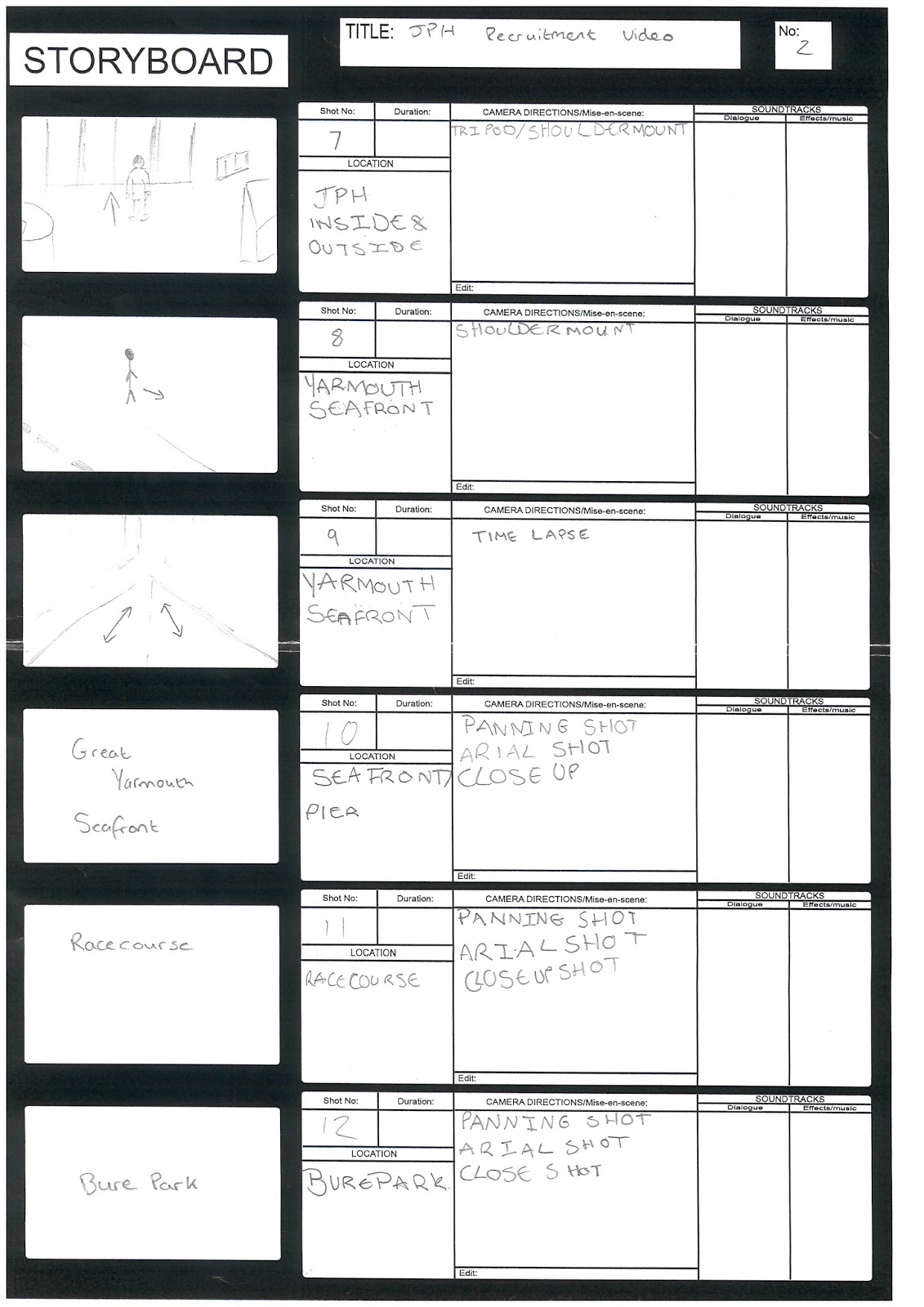
During the James Paget recruitment video, we had a lot of room to negotiate, the briefing format the client used was informal, the brief was very verbal and we had a lot of room for ideas and improvements. They knew roughly what their final product wanted to be. So we emailed the client back and forth with changes we thought would suit their brief.
During the James Paget recruitment video, we had a lot of room to negotiate, the briefing format the client used was informal, the brief was very verbal and we had a lot of room for ideas and improvements. They knew roughly what their final product wanted to be. So we emailed the client back and forth with changes we thought would suit their brief.
Using discretion within a brief offers a more flexible brief between the media company and the client, this meaning that you could discuss different ideas for their brief and the can accept or decline the offer for change. The only disadvantage is that the brief is not set in stone so things could constantly change.
With the James Paget recruitment video, we didn't have any legal problems within this brief, but we did have a big problem with communication on visits, this meaning we were travelling down to the locations and having nothing set for us to film. The dates we set were organised weeks before our first filming day, but they didn't have anything organised on arrival. To discuss the problem we emailed, and hoped they would understand. We changed the brief, they wanted three separate videos, but due to the times always changing and when getting to location we would wait over an hour to be seen, we continued doing three separate videos, but the videos were more general rather than located to a certain topic so potentially they could not use our videos because we changed the brief.
The James Paget brief let me explore self development, in our group we were able to identify who was best at doing what, and we changed the jobs so that everybody could have a go at something even if they weren't strong at it. Doing that lead to learning new skills, using different cameras, and different shot types, to get a mood out of a shot was something I learned very quickly on this brief.
Our production team only consisted of four members so this meant multi-skilling became very useful, we allocated certain roles, but also had roles as team so we could overlook as a team.
After reading the James Paget brief, we then pitched our video Idea. We had previously made mind maps and mood boards to show in our brief, this gave James Paget an idea for locations. We realised we could add to the final product as long as it stuck to their Final brief.